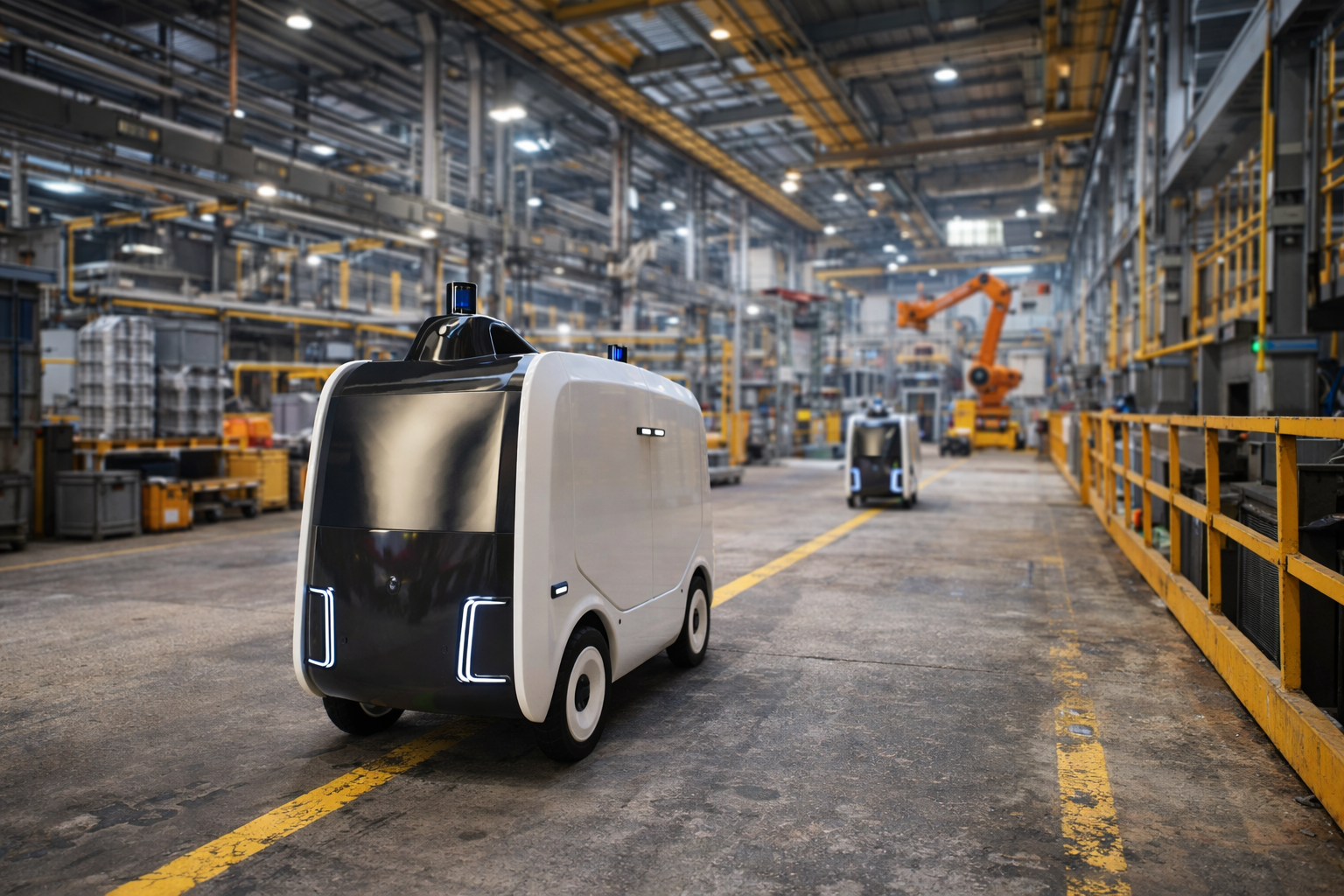
Motion Solutions for
AMRs and AGVs
Engineering‑driven motion solutions for mobile robotics
Mobile robots depend on reliable motion systems. Motors, drives, sensors and power electronics must work together as a coherent subsystem to deliver accurate movement, safe operation and predictable behaviour.
POWER&D helps robotics companies simplify motion system design. By combining subsystem engineering with carefully selected motion technologies, we help development teams build platforms that are easier to control, easier to integrate and easier to scale.
Our focus is not the vehicle itself, but the motion system inside it.
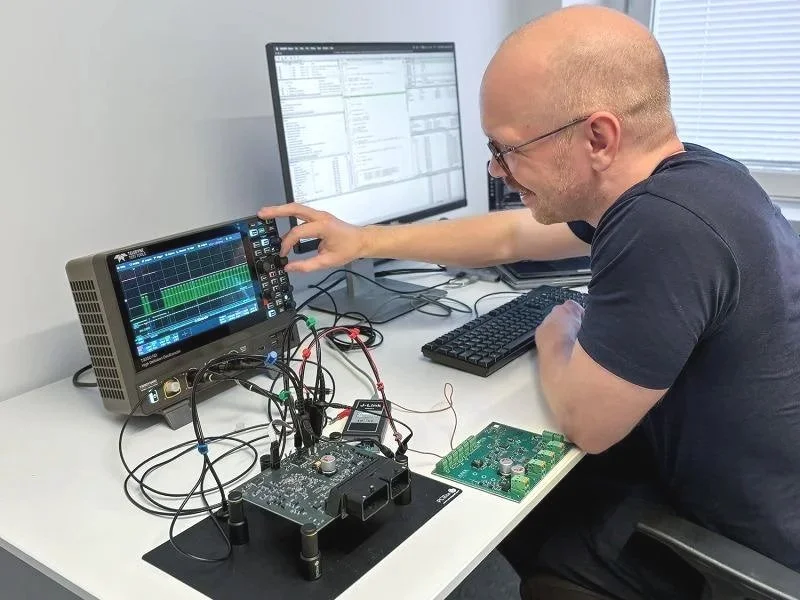
Modern AGV and AMR platforms combine mechanics, electronics and software in increasingly complex architectures. Integrating motion components from multiple suppliers can easily become a major engineering challenge.
POWER&D provides complete motion subsystems as well as individual components.
Subsystem Expertise
Drive systems
The traction system is the heart of any mobile robot. It must deliver smooth motion, efficient energy usage and precise speed control under varying load conditions.
POWER&D supports drive system design with precision motors, high‑efficiency gearboxes and high‑performance servo drives. Together these components form motion systems that deliver predictable behaviour and strong dynamic performance.
Steering systems
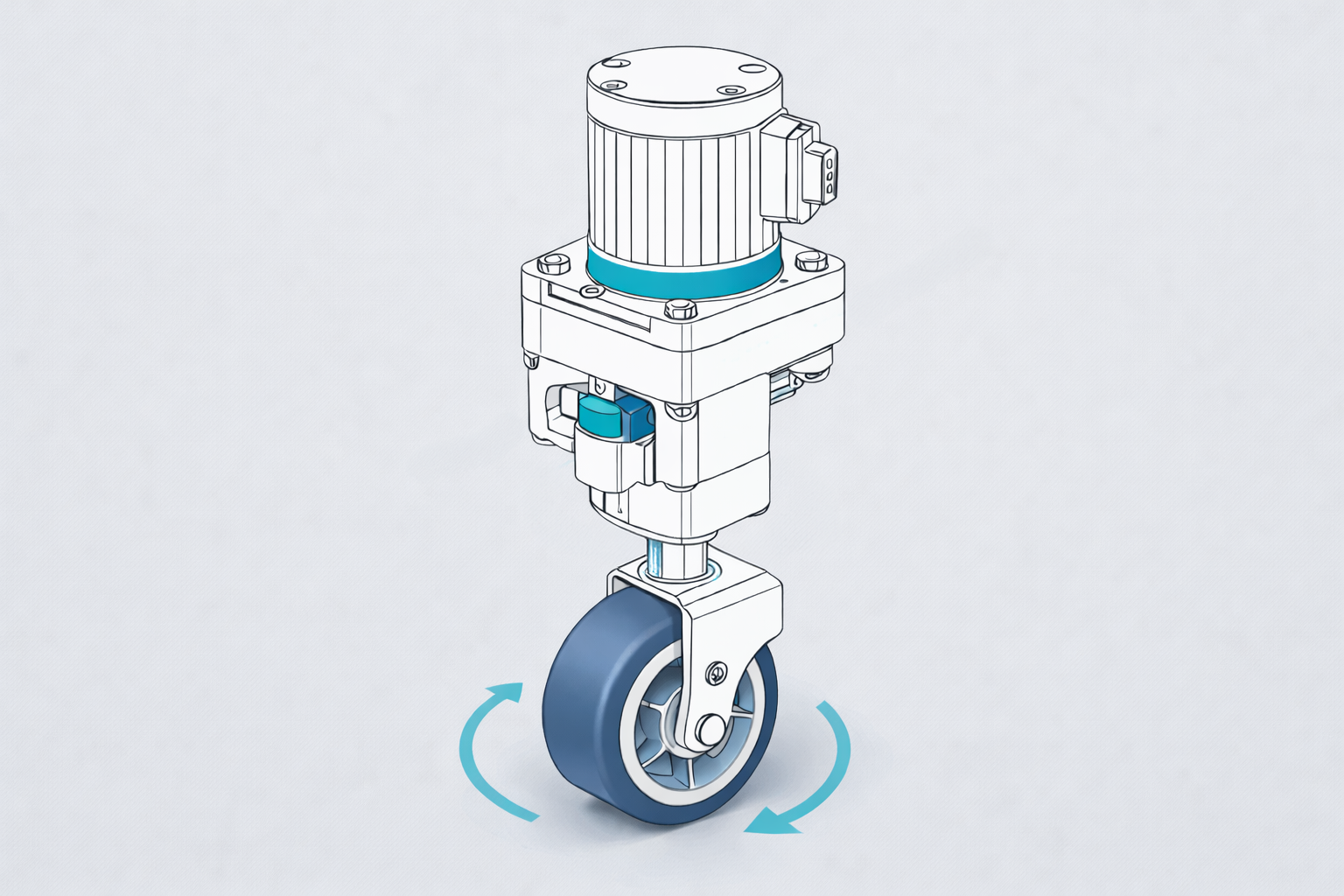
Accurate steering is essential for navigation performance and vehicle stability. Steering architectures must combine mechanical precision with reliable motion control.
We support the design of servo‑controlled steering modules using precision gearboxes, advanced motion control and high‑resolution feedback sensors.
Navigation & feedback
Reliable motion feedback is a foundation for robust navigation. Sensors must provide accurate information even in demanding environments.
POWER&D supplies high‑precision resolvers, encoders and industrial IMUs used for motion feedback and navigation support in mobile robotics platforms.
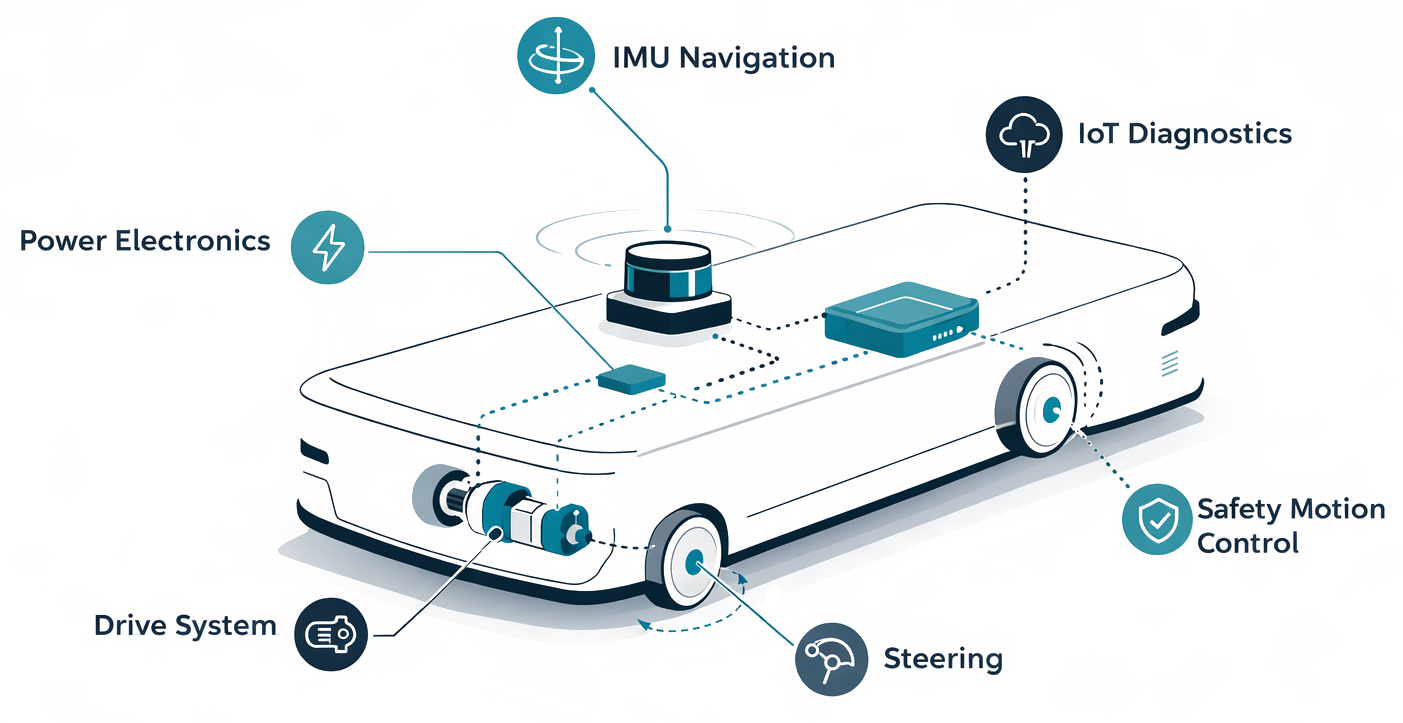
Mobile robotics subsystem architechture
POWER&D works with the entire motion architecture of the subsystem. Motors, gearboxes, drives and sensors must interact correctly to achieve stable motion behaviour.
This architecture perspective allows us to support robotics teams with component selection, motion control strategy and system integration.
Motion components for mobile robotics
Modern AGV and AMR platforms require motion components that combine precision, reliability and efficient integration. POWER&D supplies a portfolio of motion technologies that form the building blocks of advanced robotic subsystems.
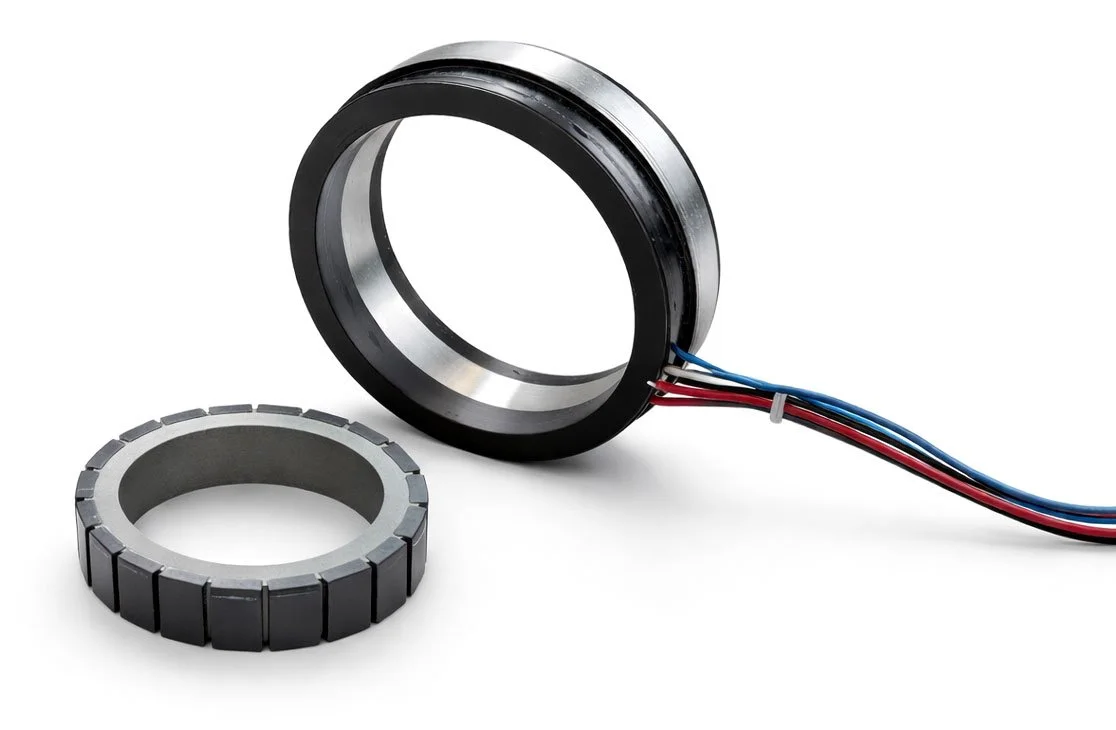
Frameless motors
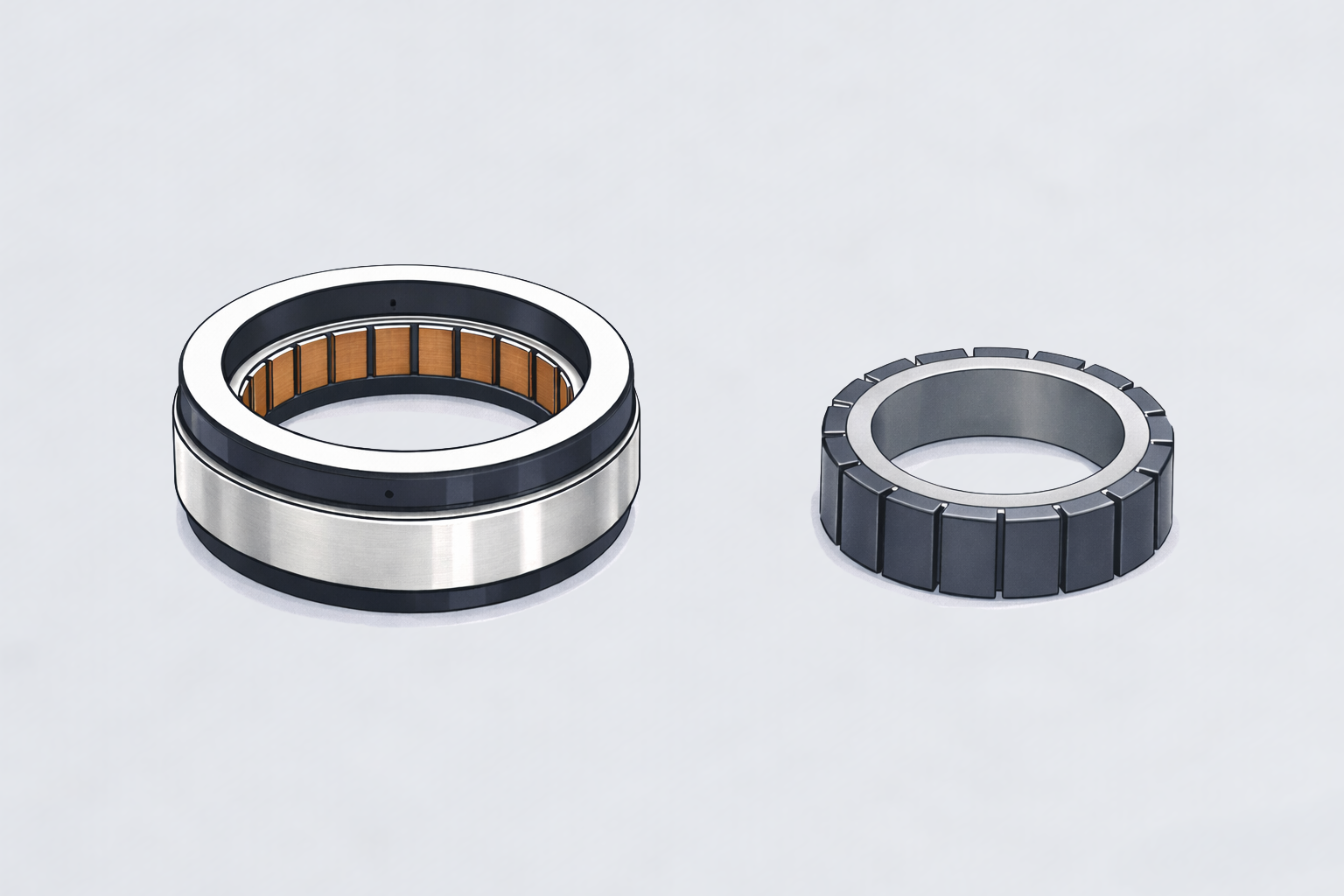
Frameless torque motors provide maximum flexibility when designing compact robotic drive systems.
They are often used in integrated wheel drives, compact steering actuators, and high-performance robotic joints
Frameless motors allow engineers to integrate the motor directly into the mechanical structure, reducing size, weight and mechanical complexity.
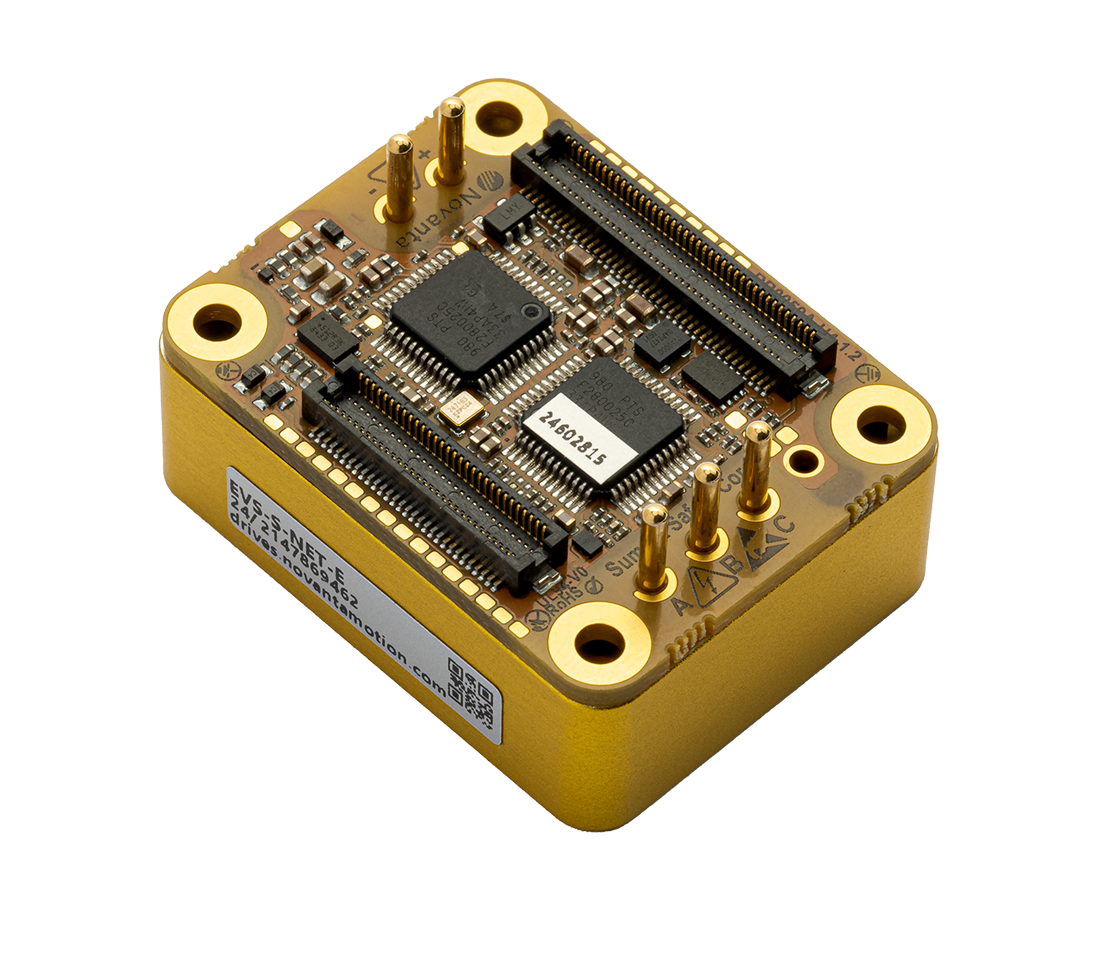
Servo drives
Servo drives control motor current, speed and position. In AGV and AMR systems they are responsible for translating motion commands into precise motor behaviour.
Modern drives support real-time motion control, fieldbus communication, and safety-related motion functions.
These capabilities make the drive a central element of the motion control architecture.
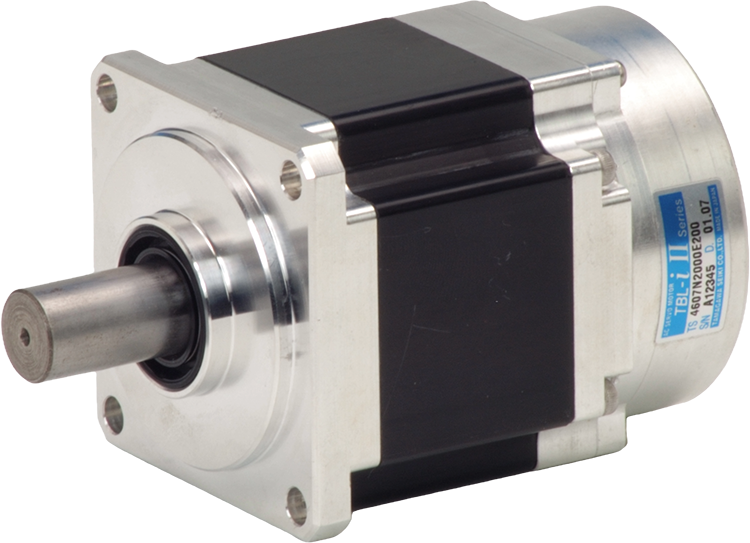
Servo motors
Servo motors provide precise speed and position control for traction systems and steering mechanisms.
Typical use cases include AGV drive systems, steering actuators, and robotic manipulators mounted on mobile platforms.
High dynamic performance and reliable feedback integration make servo motors a core technology in modern mobile robotics.
Motion sensors
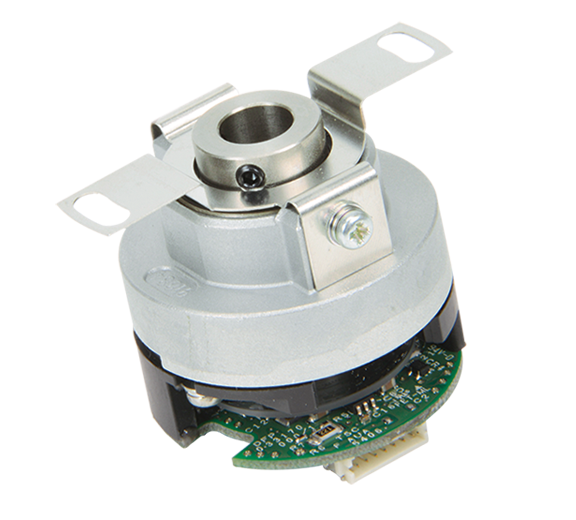
Accurate motion feedback is essential for stable motion control and reliable navigation.
POWER&D supplies sensing technologies including resolvers, encoders, and inertial measurement units (IMUs).
These sensors provide the feedback required for both motion control and vehicle localization.
Precision gearboxes
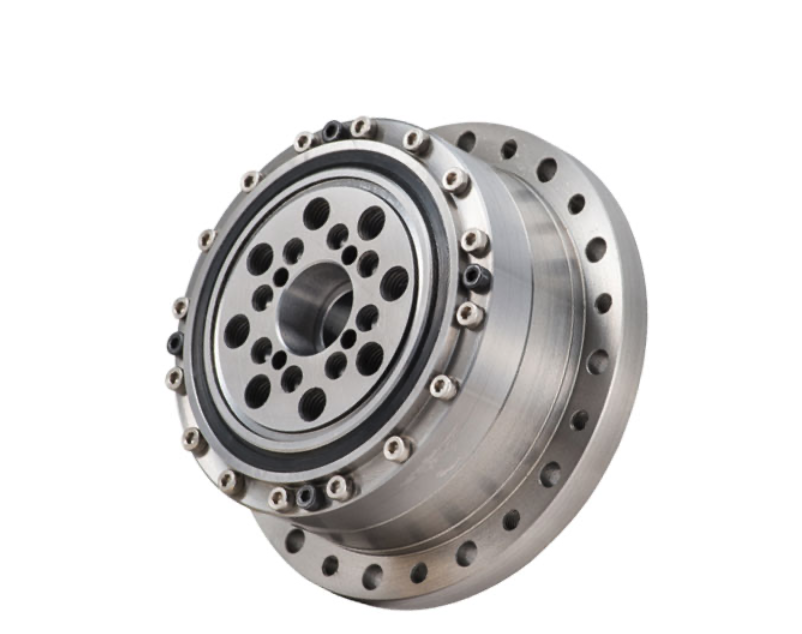
Gearboxes translate motor performance into usable torque while maintaining positioning accuracy.
POWER&D works with high-quality gear technologies suitable for robotics applications, including planetary gearboxes, and compact, precise, high-ratio gearboxes.
These solutions enable compact designs with high torque density.
Power electronics
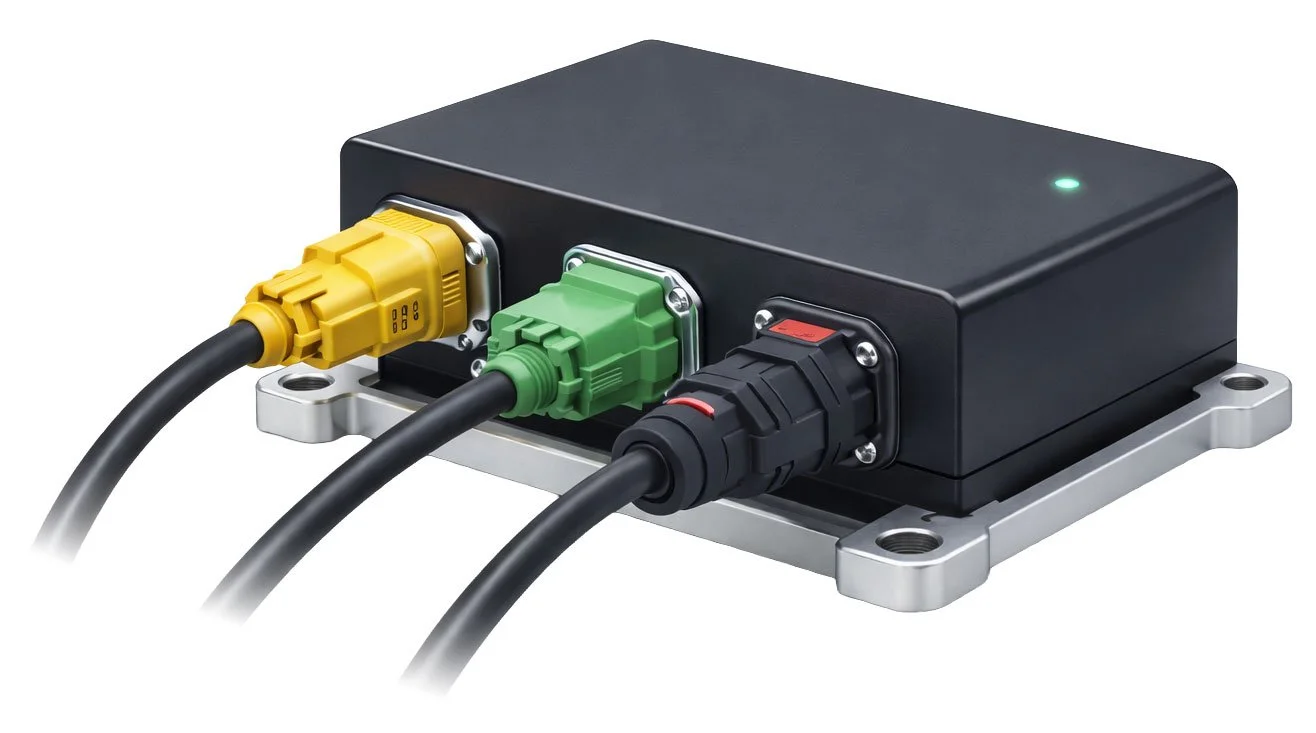
Mobile robots require efficient electrical architectures to manage energy usage and ensure stable operation.
POWER&D develops custom power systems including motor drive electronics, DC/DC conversion, and power distribution architectures.
These technologies help ensure reliable operation under dynamic load conditions.
Engineering capabilities
Motion control engineering
Servo tuning, feedback integration and optimization of high‑performance control loops.
System integration
Integration of motors, sensors, drives and control electronics into robust subsystems.
Power electronics design
Design of motor drives, power management systems and efficient electrical architectures.
Test & validation lab
Development lab including EMC testing, motor lab, environmental testing and system validation.
Embedded control systems
Development of firmware, communication interfaces and real‑time control systems.
Rapid prototyping
Iterative development cycles that allow motion subsystems to be tested and refined quickly.
Functional safety has become a central challenge in modern robotics platforms. As mobile robots increasingly operate close to humans, motion systems must support safety architectures that ensure predictable and controlled behaviour even when faults occur.
Designing these systems from scratch can add significant complexity to robotics development programs. Safety concepts must be reflected in the motion architecture, component selection and control strategy.
POWER&D helps simplify this process by supporting motion architectures that are compatible with functional safety requirements. Many of the drives and other components we work with are already used in safety-oriented industrial systems and support safety-certified architectures.
This allows robotics teams to focus on system functionality while building on motion technologies that are already aligned with modern safety expectations.
By addressing safety at the subsystem level early in development, teams can reduce redesign cycles and move more confidently from prototype to industrial deployment.
Functional safety in motion systems
Technology partners